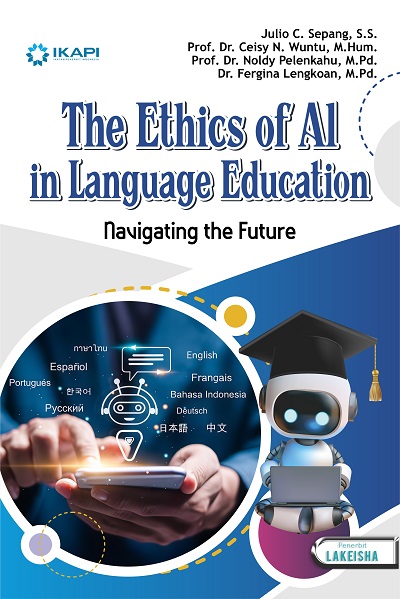
The integration of Artificial Intelligence (AI) in language education can bring a revolution to the way students and teachers learning and teaching languages. However, this emerging technology also raises important ethical questions about fairness, transparency, and accountability of such technology. As AI becomes increasingly ubiquitous in language education, it is very important to examine the moral implications of the usage of it and to convince that its benefits are equitably distributed. The Ethics of AI in Language Education: Navigating the Future is written as a contribution to the critical discussion on the ethics of AI application into language education, bringing together perspectives from experts in AI, language education, and ethics. The chapters in this volume explore the complex issues surrounding AI-powered language learning, including bias and fairness, data protection, and the role of human teachers in the AI-mediated language learning environments.